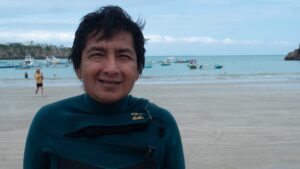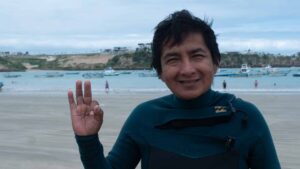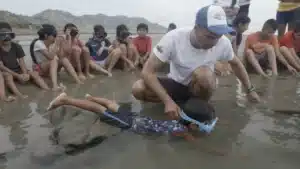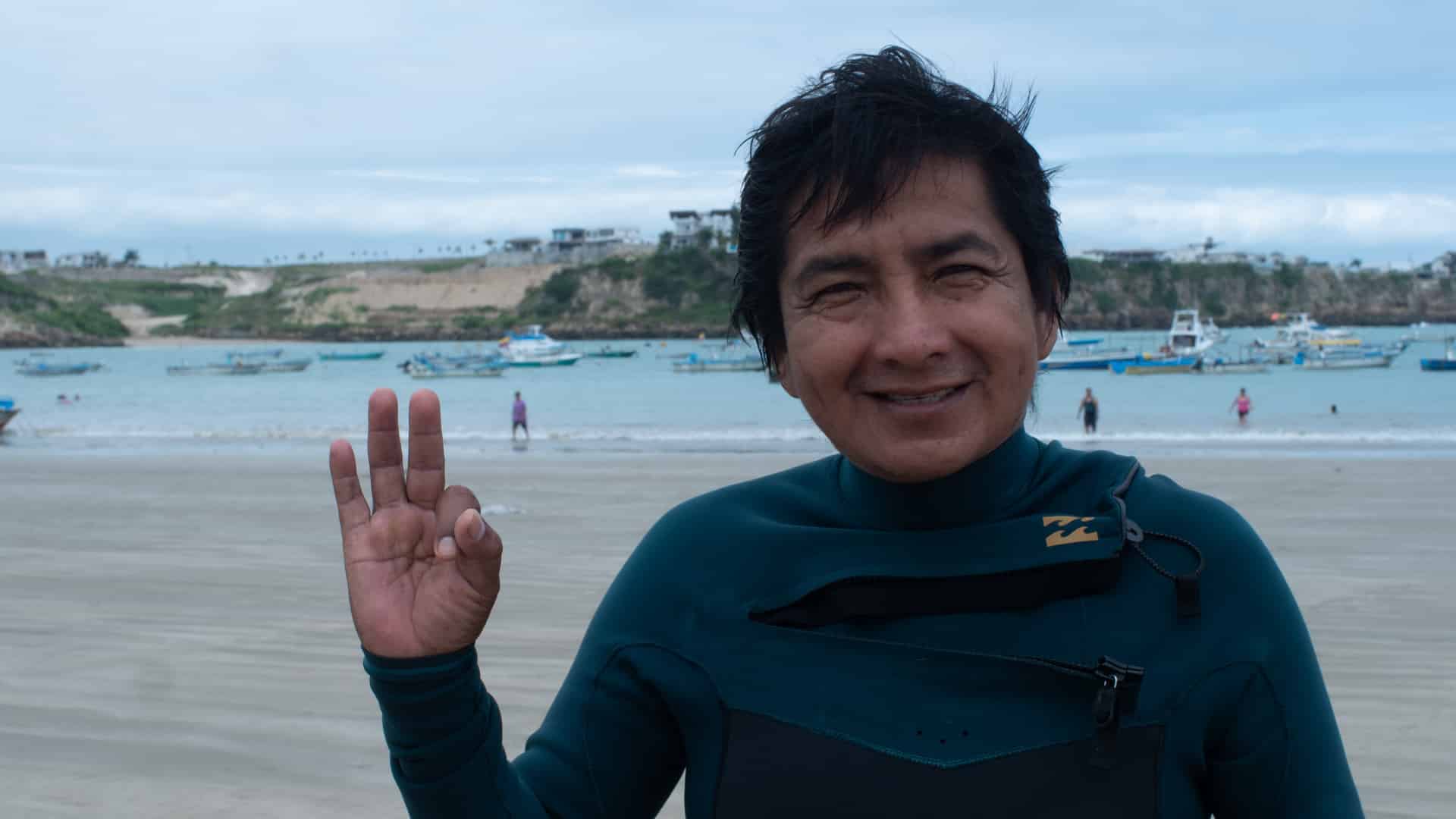
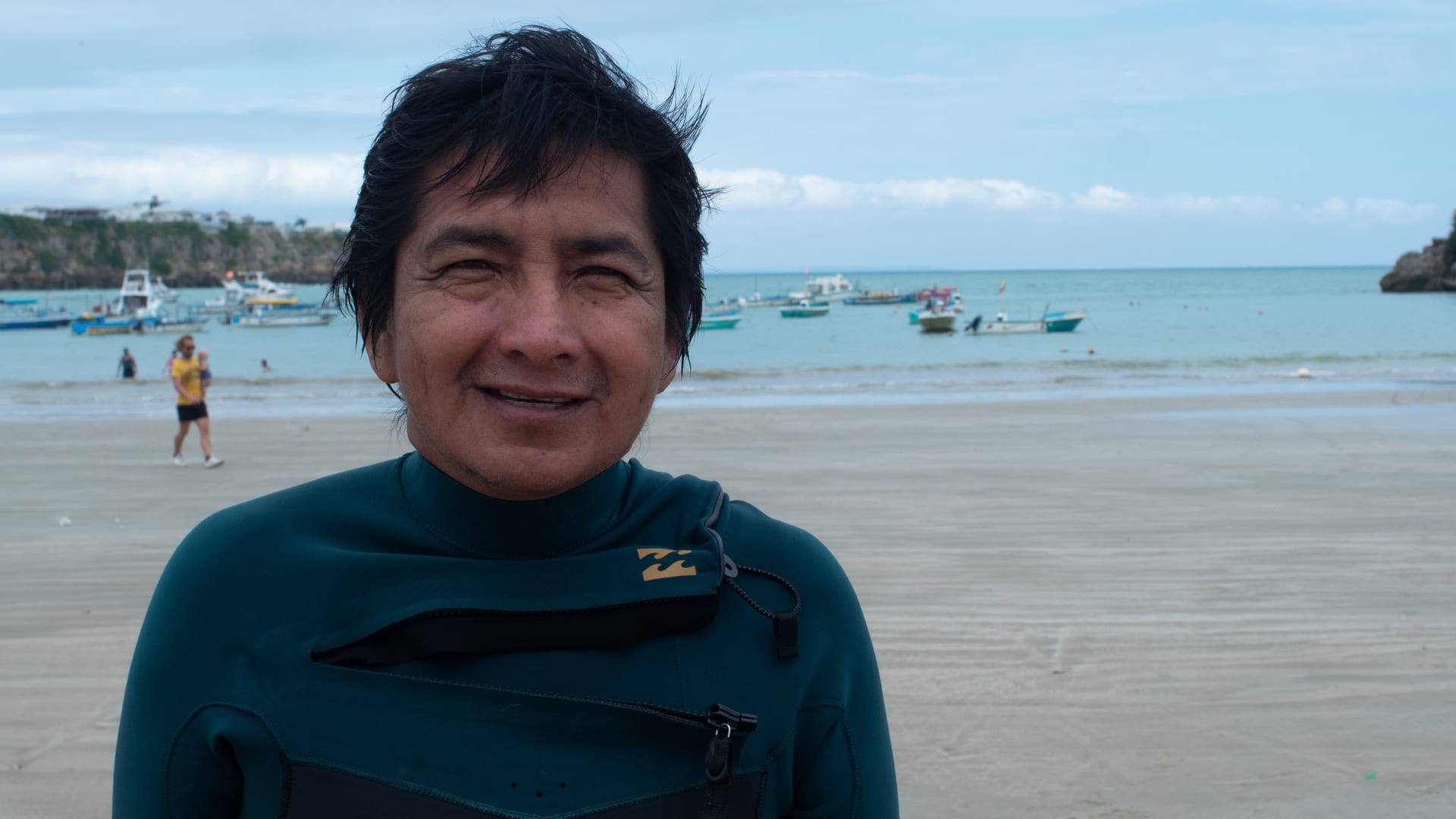
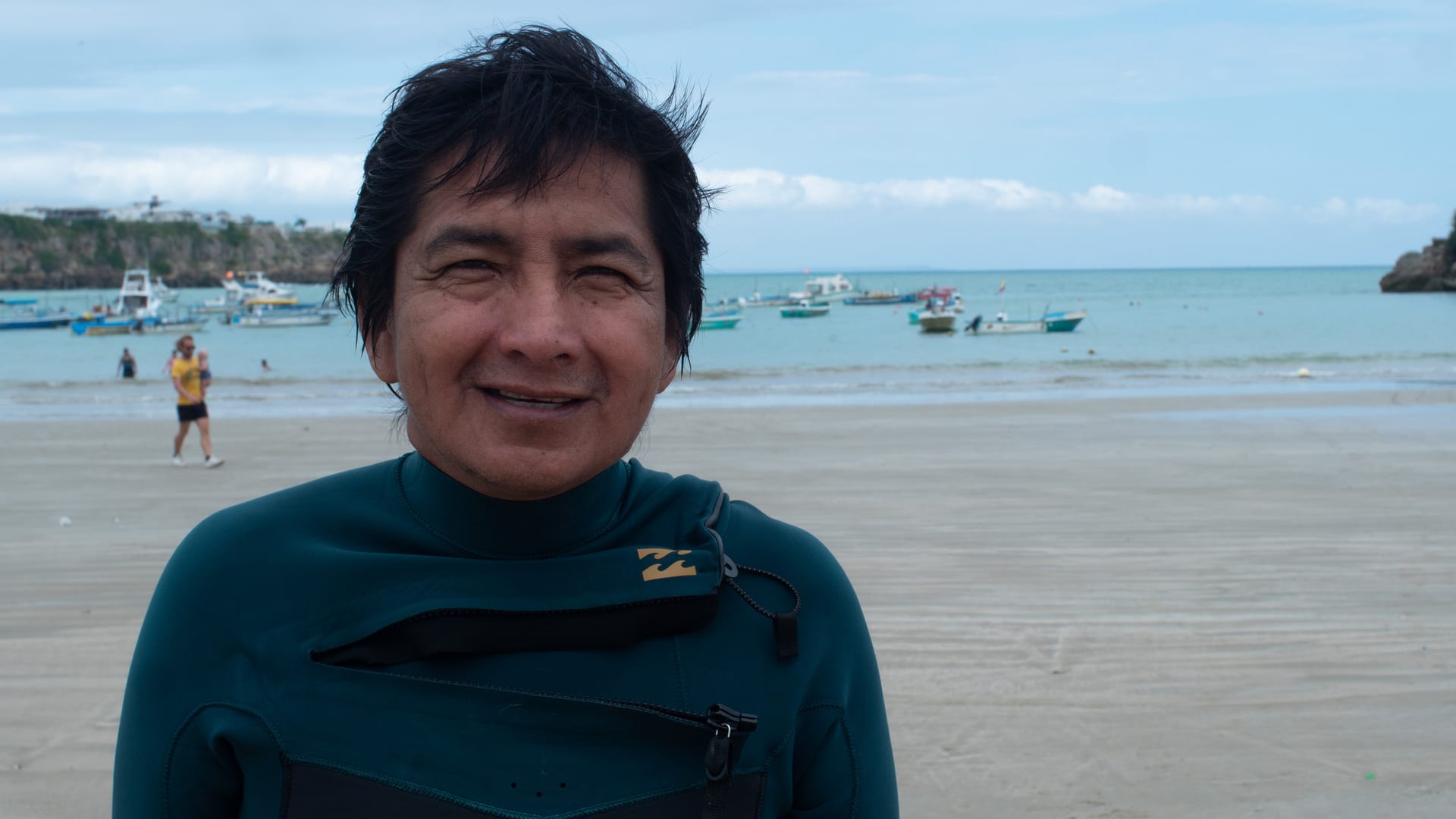
In Ayangue, Ecuador, the sea is livelihood, memory, and possibility. Ambrosio Yagual grew up in this coastal community, learned artisanal diving as a child, and made his living as a fisherman. His documentary follows the turn that led him from fishing into tourism, community organizing, and the long-term care of an underwater landmark.
A life formed by the coast
Ambrosio describes traveling to other ports when local fishing conditions required it. The work connected his family to the ocean, but it also exposed them to danger. After violence entered his family’s life, he stopped returning to the same fishing routine and focused more fully on diving and tourism.
The change was practical, but it was also personal. The diving knowledge he had carried since childhood became the foundation for a different future.
Building the Christ of the Abyss
During a week of diving with a visitor, Ambrosio shared the places he knew around Ayangue. The visitor saw both the beauty of the area and the damage people had caused, then proposed placing a statue of Christ beneath the water.
Ambrosio brought the idea to community leaders. When plans arrived for a base weighing roughly four tons, he made calls, raised local support, and helped organize the work. The base was built by hand. Two boats then towed it to Islote El Pelado, where the team lowered it into place facing the port.
The operation was more than a construction project. It gave the community a visible point of connection between faith, tourism, diving, and the health of the surrounding water.
From underwater landmark to marine protection
The documentary traces what followed: another vessel was placed underwater, and the area around El Pelado was later declared a marine reserve. Mooring buoys helped keep boats from anchoring directly on the reefs. Ambrosio says tourism grew as visitors came to dive, see the statue, and experience the marine reserve.
He also describes an increase in marine life around the site, including manta rays and a whale shark sighting. Those observations are part of his lived account of how the area changed over time.
Stewardship means returning
Creating the statue was only the beginning. Ambrosio, his children, and friends have repeatedly removed, repaired, repainted, and returned it after damage. That ongoing maintenance is a quieter form of heroism: showing up after the attention has moved elsewhere.
I did it from the heart, because one is reborn.
Ambrosio Yagual, translated from the documentary
Ambrosio’s pride is rooted in Ayangue. His story shows how one person can connect a community’s traditions to a new kind of local opportunity while helping people see the ocean as something worth protecting.
Why Ambrosio Yagual is an everyday hero
Ambrosio used the skills he already had, brought other people into the work, and stayed involved long after the first success. He helped turn an idea into a landmark, a tourism resource, and a continuing reason to care for the marine environment.
Related marine and wildlife hero stories
- Michel Guerrero protects giant manta rays along Ecuador’s coast.
- Tracey Lemon helps protect sea turtles in Tambor Bay.
- Sebastián Hernández teaches safer freediving and marine respect in Ligüiqui.
Frequently asked questions
Where is Ayangue?
Ayangue is a coastal community in Ecuador’s Santa Elena Province.
What did Ambrosio Yagual help create?
He helped organize the construction and underwater placement of a Christ statue near Islote El Pelado, then continued helping maintain it.
How did the project affect the community?
In Ambrosio’s account, the underwater attraction and the later marine reserve supported tourism and encouraged greater care for the reefs and marine life.
Watch the full documentary in the player above, then share Ambrosio’s story with someone who believes local knowledge can help a community protect its future.
The post Ambrosio Yagual: How One Diver Helped Ayangue Protect Its Sea appeared first on Your Everyday Heroes.