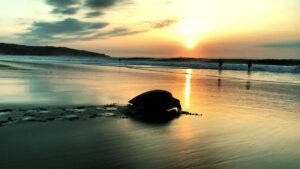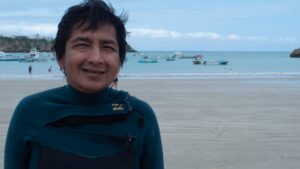
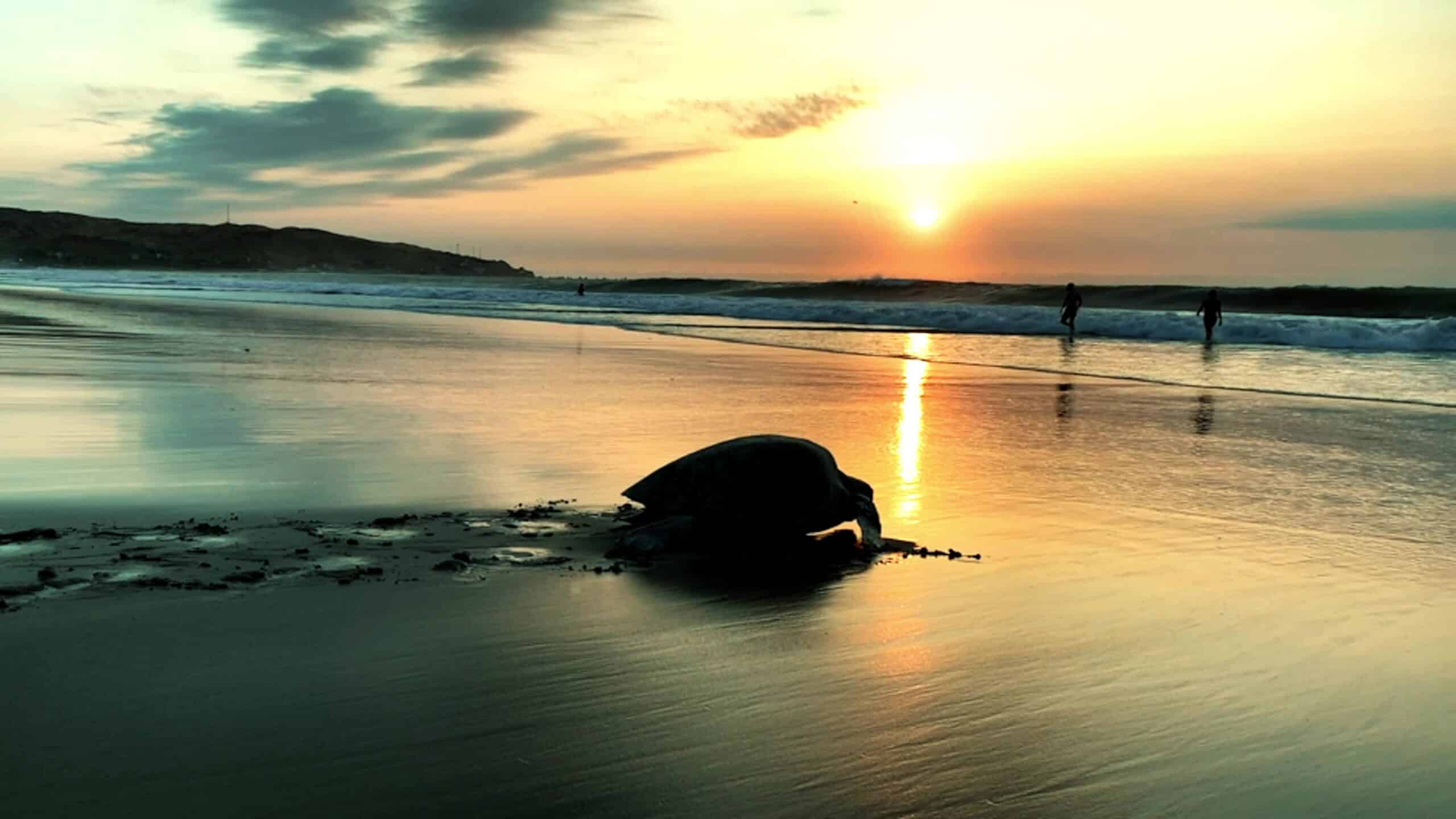
On the beaches of Máncora, Peru, every stranded turtle carries information that could help protect the next one. Marine biologist Carmen González walks the coast, records what she finds, works with fishing communities, and helps people understand how their choices affect threatened marine species.
Her documentary follows a conservation practice that combines research with relationships. The measurements matter, but so do the fishermen, volunteers, hotel workers, and neighbors who learn how to respond when a turtle is caught or a nest is discovered.
A life shaped by animals and marine biology
Carmen says she has been interested in animals for as long as she can remember. That interest led her to study marine biology and eventually to conservation work on Peru’s northern coast.
Every animal is important, lives for a very specific reason, and plays several roles in the ecosystem.
Carmen González, translated in the documentary
Seven species of sea turtle live around the world, and five have been observed in Peru. Carmen explains that many turtles become entangled in fishing nets. Because they breathe air, a trapped and stressed turtle can drown before it reaches the surface.
Teaching fishermen how to save a trapped turtle
Carmen’s team teaches fishing communities what to do when a turtle is caught. Training includes how to bring the animal onto the boat, check its condition, use rehabilitation techniques when needed, and decide whether it can be safely released.
That knowledge can turn an accidental capture into a rescue. It also changes conservation from something imposed from outside into a skill the community can use on the water.
What a stranded turtle can teach researchers
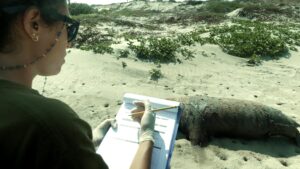
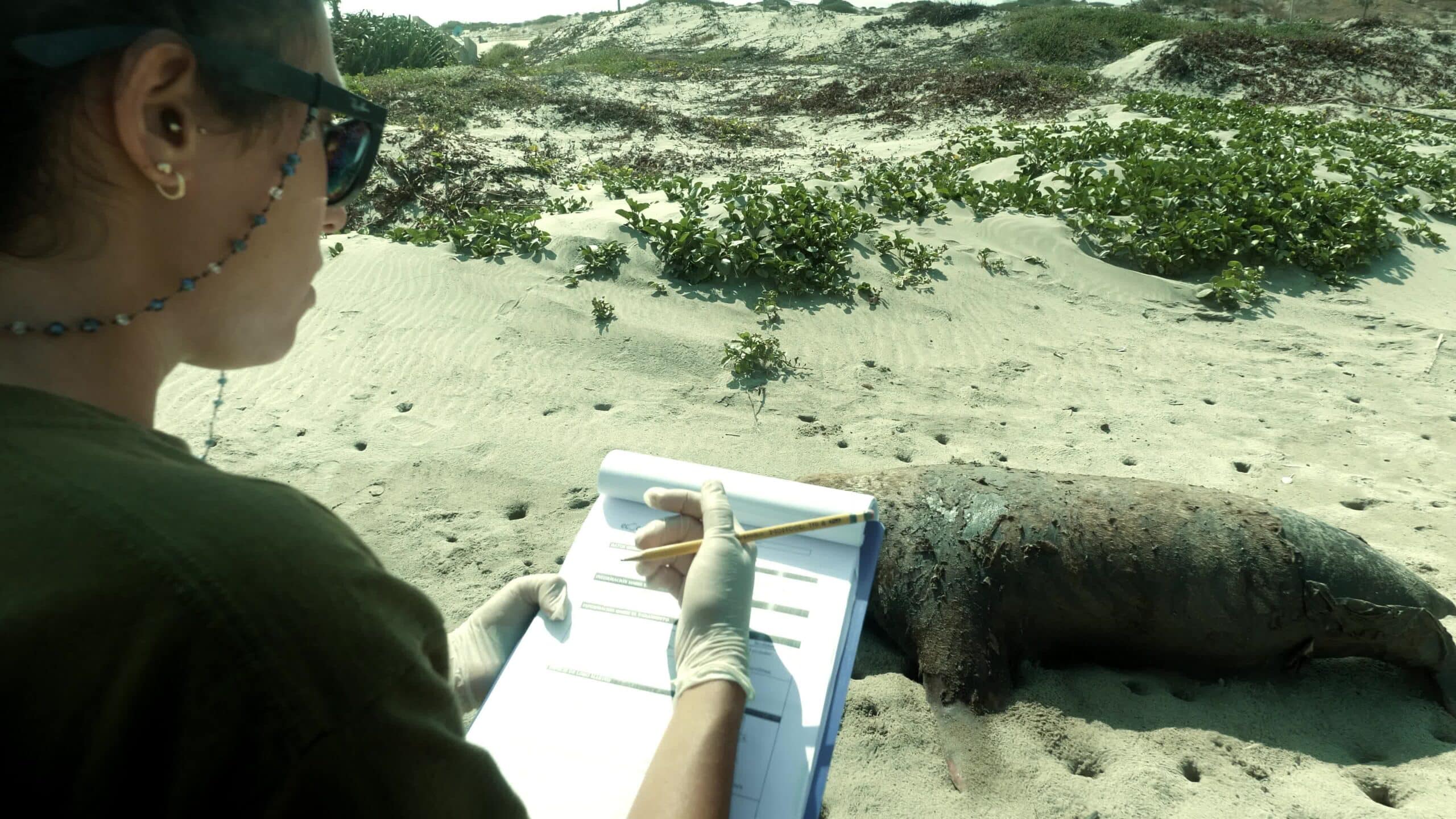
When Carmen documents a stranded animal, she records measurements, species, color, and whether it was found alive or dead. Together, these observations help researchers understand which species are stranding, where they are appearing, and what may have happened to them.
In the film, Carmen examines the shell of a critically endangered hawksbill turtle. She describes the find as especially valuable because hawksbills were once thought to have disappeared from that part of the Pacific.
Protecting nests through community partnerships
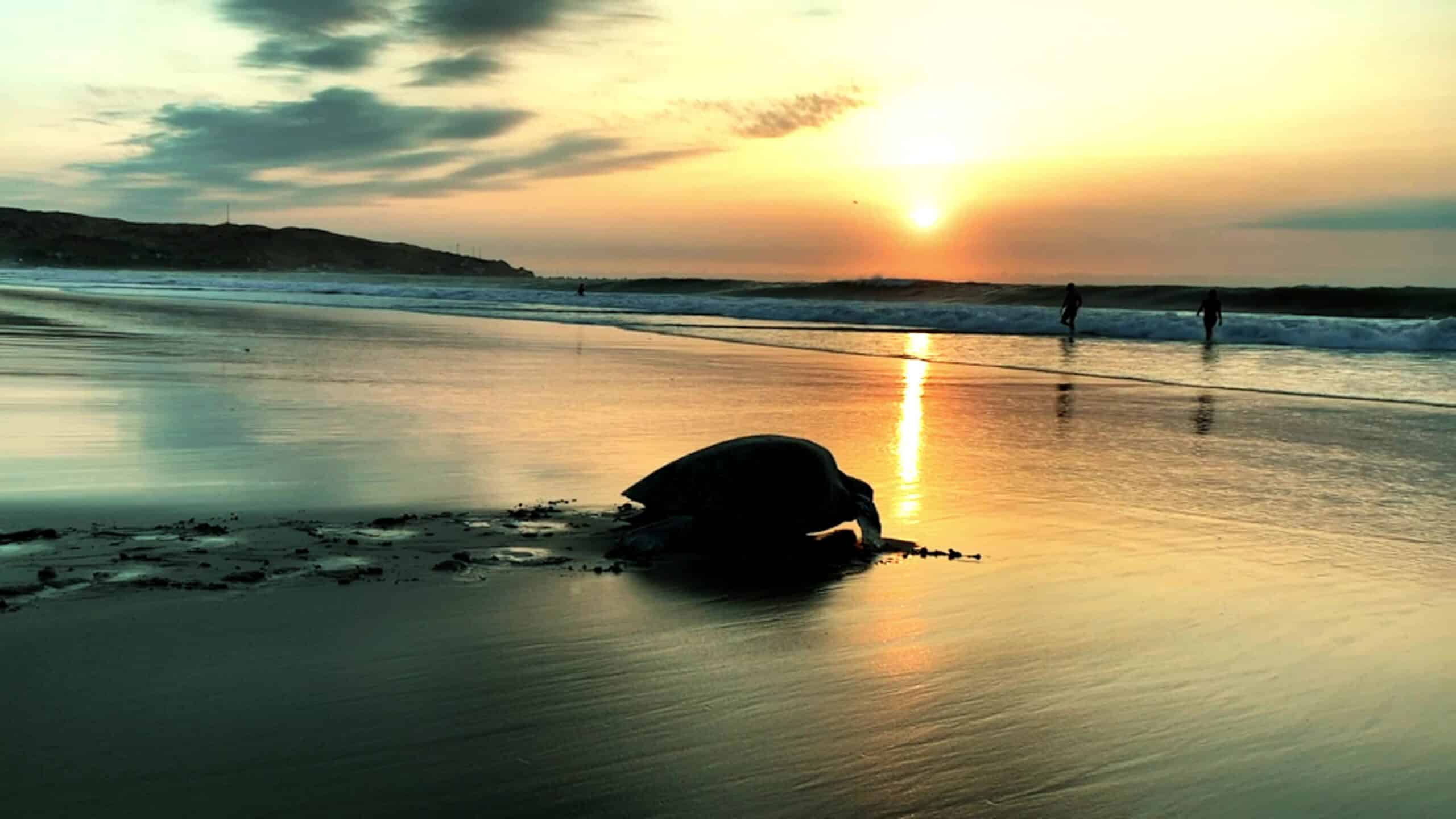
Carmen began this work as a volunteer in 2015. Her responsibilities grew to include supporting new volunteers and coordinating intensive research activities such as nest evaluation, hatch-rate monitoring, beach cleanups, and searches for stranded wildlife.
The community is central to the work. Local residents help report and monitor nests. Fishing boats support research trips. Workshops give fishermen and other residents a role in the same mission.
A sea turtle nest may contain roughly 60 to 180 eggs. After about 45 to 60 days, hatchlings emerge and move toward the sea. Carmen explains that young turtles may then spend 10 to 12 years in the open ocean during a period researchers sometimes call the lost years.
A connection between Peru and the Galápagos
Annual aquatic surveys have also revealed a connection between the northern coast of Peru and the Galápagos Islands. Researchers in the Galápagos have found turtles carrying tags from Carmen’s region, while Carmen’s team has encountered turtles tagged in the Galápagos. The exchange shows how widely these animals travel to feed and reproduce.
Conservation beyond the shoreline
Carmen’s environmental work extends beyond marine wildlife. With her partner, she helped create an organic-waste composting project that collects food waste, turns it into compost, and returns useful material to local people and businesses.
The compost supports gardens, community orchards, native plants, and reforestation efforts. It also keeps organic waste away from uncovered landfills where it can contribute to pollution and greenhouse-gas emissions.
Why Carmen González is an everyday hero
Carmen connects scientific knowledge to actions people can take immediately. She documents evidence, trains fishing communities, supports volunteers, protects nests, and builds trust with the people who share the coast. Her work recognizes that saving wildlife requires both data and community participation.
Related women and animal-rescue heroes
- Tracey Lemon protects sea turtles and nesting beaches in Costa Rica.
- Jill Carnegie provides sanctuary for tigers and other animals.
- Niccalina Santilli helps abandoned dogs find permanent homes.
- Ambrosio Yagual connects marine tourism and conservation in Ecuador.
Frequently asked questions
Where does Carmen González work?
Her documentary follows conservation work around Máncora on the northern coast of Peru.
Why do sea turtles drown in fishing nets?
Sea turtles have lungs and must reach the surface to breathe. Entanglement and stress can prevent them from surfacing.
How does Carmen help fishing communities?
Her team teaches fishermen how to handle, evaluate, rehabilitate, and safely release accidentally captured turtles.
What other environmental work does Carmen support?
She also supports organic-waste composting, community gardens, native plants, and local reforestation.
Watch the full documentary in the player above, then share Carmen’s story with someone who believes science and community knowledge belong together.
The post Carmen González: Protecting Sea Turtles in Máncora, Peru appeared first on Your Everyday Heroes.